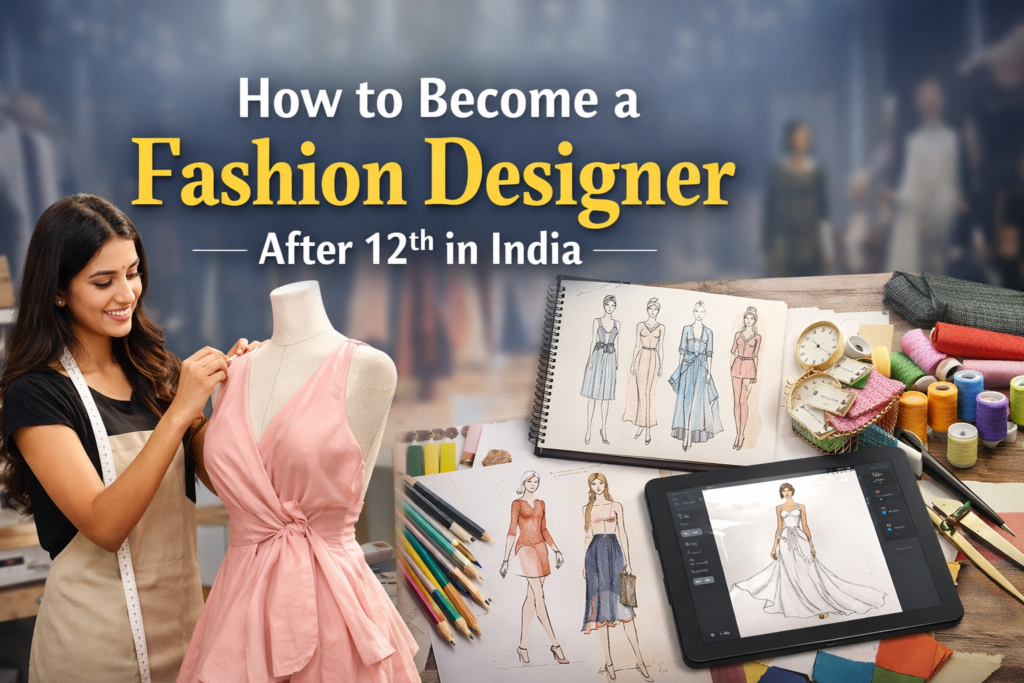
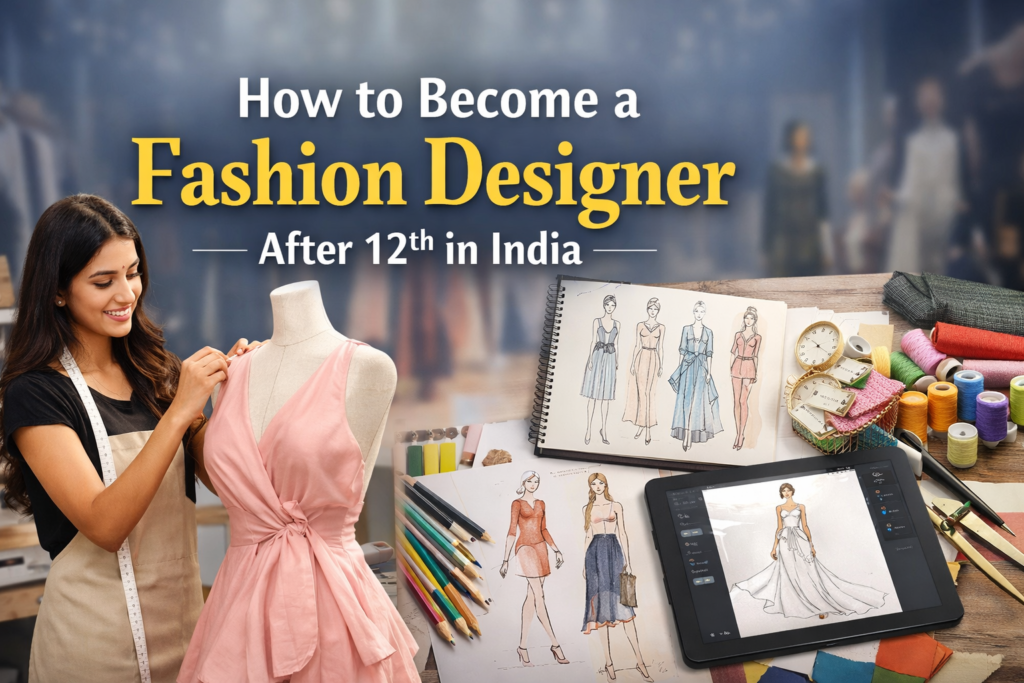
If you’ve just finished your 12th and keep finding yourself drawn to clothes, styling, trends, or even sketching outfits in your notebook… you’re already closer to fashion design than you think.
The real question isn’t “Can I do this?” – it’s “What’s the right path to start?”
This guide breaks everything down in a clear, practical way – from courses and eligibility to fees, career options, and what actually happens inside a fashion design program in India.
Before jumping into courses, it helps to understand the work.
A fashion designer doesn’t just “design clothes.” The role includes:
It’s a mix of creativity + technical skill + market awareness.
Yes and this is actually the most common starting point in India.
Eligibility:
That means even if you didn’t study design earlier, you can still enter this field.
Step 1: Choose the Right Course
The strongest foundation comes from a structured degree program that teaches both creative and technical aspects.
One of the most complete options is a B.Sc. degree in Fashion Design & Technology.
If you’re exploring a detailed program structure, you can check this course here:
https://www.isftcollege.com/b-sc-fashion-design-technology/
Step 2: Understand What You’ll Learn
A good fashion design course is not just about sketching. It trains you across multiple areas.
Core Skills You Build:
Step 3: Focus on Practical Learning
The difference between average and strong designers is practice.
A well-designed program includes:
This is where students actually learn how the fashion industry works.
Step 4: Build Your Portfolio
Your portfolio matters more than your marks.
It includes:
This becomes your entry ticket into jobs or freelance work.
Step 5: Choose Your Career Direction
Fashion is a wide field. After your course, you can go into:
We’ll break this down later.
This 3-year program is designed to give you both creative freedom and technical depth.
Duration:
Eligibility:
What You Study – Semester Wise
Semester 1: Foundation
This is where you learn the basics – fabrics, stitching, and design thinking.
Semester 2: Skill Building
You start creating actual designs and understanding how garments are built.
Semester 3: Intermediate Level
Now your understanding expands globally, and your designs become more refined.
Semester 4: Industry Exposure
You begin thinking like the industry not just creating, but selling ideas.
Semester 5: Production & Business
This stage prepares you for real-world production and retail.
Semester 6: Final Stage
You graduate with a complete portfolio and industry readiness.
This isn’t a theory-heavy degree.
You get:
That’s what helps students move confidently into the industry.
Fees can vary depending on the institute and facilities.
Average Range:
Private institutes with strong practical training may charge more but they also offer better exposure.
Once you complete your degree, there’s no single path. You can choose based on your interest.
Popular Career Options:
1. Fashion Designer
Create your own clothing line or work with brands.
2. Fashion Stylist
Work with celebrities, influencers, or shoots.
3. Fashion Blogger / Influencer
Build your own audience online.
4. Fashion Merchandiser
Plan what products stores should sell.
5. Textile Designer
Work with fabrics, prints, and materials.
6. Fashion Illustrator
Create design concepts for brands or studios.
7. Fashion Journalist
Write about trends, brands, and industry updates.
8. Fashion Entrepreneur
Start your own brand or label.
Your earnings depend on your skills, portfolio, and experience.
Starting Salary:
With Experience:
Freelancers and brand owners can earn much more depending on growth.
Yes – but only if you treat it seriously.
This field rewards:
It’s not just about passion – it’s about turning creativity into a profession.
You don’t need to be perfect at the start, but these help:
Most of these skills are developed during the course.
Your college decides:
A structured program like this one helps you build both creativity and technical understanding:
https://www.isftcollege.com/b-sc-fashion-design-technology/
Starting fashion design after 12th is one of the smartest ways to enter the creative industry early.
If you choose the right course, focus on practice, and build a strong portfolio – you won’t just study fashion, you’ll build a career in it.
Yes. Basic drawing helps, but it’s not mandatory. You’ll learn sketching during the course.
Any stream works – Science, Commerce, or Arts.
Most degree courses like B.Sc. in Fashion Design last 3 years.
You must have passed 12th grade from any recognized board.
Fees vary, but typically range from ₹1.5 lakh to ₹5 lakh per year depending on the institute.
You can work as a designer, stylist, merchandiser, blogger, or even start your own brand.
Yes. Many students start their own labels after gaining experience and building a portfolio.