

The student design to runway process is an exciting part of fashion education. It is the stage where students take their finished garments from the design studio to the catwalk.
However, creating a beautiful outfit is only the beginning. Before a garment reaches the runway, students must work on fittings, styling, model selection, rehearsals and backstage preparation.
Every detail matters, from choosing the right footwear to making sure the garment moves comfortably.
Let’s explore how fashion students prepare their designs for a successful runway presentation.
What Is the Student Design to Runway Process?
The student design to runway process involves transforming a completed garment into a fully styled outfit ready for a fashion show.
The main stages include:
- Selecting garments for the collection
- Developing a collection theme
- Choosing models
- Conducting fittings and alterations
- Planning accessories, hair and makeup
- Preparing the runway sequence
- Organising rehearsals
- Managing backstage arrangements
- Presenting the final collection
Each stage helps students understand how fashion design works beyond the classroom.
1. Selecting the Right Garments
Not every garment created during a fashion course needs to appear on the runway.
Students should select outfits that represent their collection’s concept, creativity and technical skills.
Important factors include:
- Design consistency: Garments should follow a connected theme.
- Construction quality: Stitching, finishing and fitting should be checked.
- Visual appeal: Each outfit should contribute something interesting.
- Comfort: Models should be able to walk and move safely.
A collection should have enough variety to keep the presentation interesting while maintaining a clear design direction.
2. Creating a Collection Story
A good fashion collection presentation tells a story through clothing.
Students may find inspiration in traditional art, nature, architecture, cultural influences or personal experiences.
For example, a collection inspired by Indian heritage might feature traditional embroidery, rich fabrics and modern silhouettes.
Once the theme is clear, students can decide on colours, materials, accessories and styling.
This helps create a collection in which every garment feels connected.
3. Runway Look Development
Runway look development is the process of bringing clothing, styling and model presentation together.
Students need to think beyond the garment itself.
Choosing accessories
Jewellery, handbags, belts and other accessories should complement the design without hiding important details.
Selecting footwear
Shoes should match the outfit while allowing the model to walk comfortably. Footwear also affects posture and garment length.
Planning hair and makeup
Hair and makeup should reflect the collection’s mood. A minimal collection may need natural styling, while an experimental collection may require a more dramatic appearance.
Students should test the complete look before the final presentation.
4. Model Selection and Garment Fittings
Choosing suitable models is another important part of runway preparation.
Students should consider garment measurements, comfort, walking ability and the overall presentation style.
Once models are selected, fittings help identify necessary adjustments.
During fittings, students should check:
- Shoulder, waist and overall fit
- Garment length
- Necklines and closures
- Comfort while walking
- Fabric movement
- Footwear compatibility
A garment may appear perfect on a mannequin but behave differently when someone walks in it.
That is why fittings and movement tests are essential.
5. Student Catwalk Preparation
Student catwalk preparation involves teaching models how to present garments confidently and follow the planned runway sequence.
Models should understand where to enter, walk, pause, turn and exit.
Rehearsals help students check whether garments move as intended.
For example, a flowing gown may require slower movement, while structured tailoring may suit a different walking style.
Practising in the final footwear is equally important because shoes can affect balance and confidence.
6. Planning the Fashion Collection Presentation
The order in which garments appear can influence how audiences experience the collection.
A typical sequence includes:
- Opening look: Introduces the collection’s theme.
- Development looks: Explore variations in colours, fabrics and silhouettes.
- Hero look: Highlights an important design or technique.
- Closing look: Creates a memorable finish.
Music, lighting and model movement should support the collection.
Students also need to consider whether models have enough time to change outfits between appearances.
A well-planned sequence makes the entire presentation easier to follow.
7. Backstage Preparation and Management
Behind every successful fashion show is an organised backstage team.
Students should number each garment and prepare clear look cards containing the model’s name, accessories, footwear and styling instructions.
Backstage preparation includes arranging garments in order, assigning dressers, organising accessories and preparing changing areas.
A small emergency kit containing safety pins, needles, threads, fashion tape and spare fastenings can also help manage minor problems.
Clear communication prevents confusion during quick outfit changes.
8. Rehearsals Before the Fashion Show
Rehearsals allow students to test their preparation before the actual event.
The team should practise the complete runway sequence, including music, lighting, model movement and backstage changes.
A dress rehearsal helps identify problems such as loose accessories, uncomfortable garments or insufficient changing time.
Students can then make adjustments before the final presentation.
9. Runway Photography and Portfolio Development
A fashion show also creates opportunities for students to document their work.
Photographs should capture the garment from different angles, including close-ups of embroidery, construction and fabric details.
Students can use these images in their fashion design portfolios alongside:
- Inspiration boards
- Fashion illustrations
- Fabric selections
- Garment construction photographs
- Styling concepts
- Final runway images
A complete portfolio demonstrates both creative thinking and practical design skills.
Watch Student Designs Come to Life on the Runway
Watch this student fashion runway presentation to see how garments, styling and model movement come together on the catwalk.
Observe how each outfit moves and how the collection is presented as a complete visual story.
Learning Fashion Design at ISFT
At ISFT, the Diploma in Fashion Design & Technology introduces students to important aspects of fashion design, including textile science, fashion illustration, sewing, garment construction, draping, accessories, CAD and portfolio development.
These subjects help students build the creative and technical knowledge involved in developing garments and preparing completed designs for presentation.
Students interested in fashion education can explore the Diploma in Fashion Design & Technology to learn more about the course structure and curriculum.
Conclusion
The student design to runway process teaches fashion students that designing a garment is only one part of creating a successful collection.
From selecting garments and conducting fittings to planning styling and rehearsals, every stage contributes to the final presentation.
By understanding these steps, students can develop stronger design skills, improve their confidence and learn how their creative ideas translate into real runway experiences.
FAQs
1. What is the student design to runway process?
It is the process of preparing finished garments for a fashion show through garment selection, fittings, styling, rehearsals and backstage coordination.
2. Why are fittings important before a runway show?
Fittings help students check garment size, comfort, movement and construction. They also identify alterations required before the presentation.
3. What is runway look development?
Runway look development involves combining garments with suitable models, accessories, footwear, hair and makeup to create a complete catwalk appearance.
4. How do fashion students prepare for the catwalk?
Students prepare through model selection, garment fittings, styling, runway rehearsals, collection sequencing and backstage planning.
5. How does a runway show help fashion design students?
A runway show gives students practical experience in garment presentation, teamwork, styling, event coordination and portfolio development.
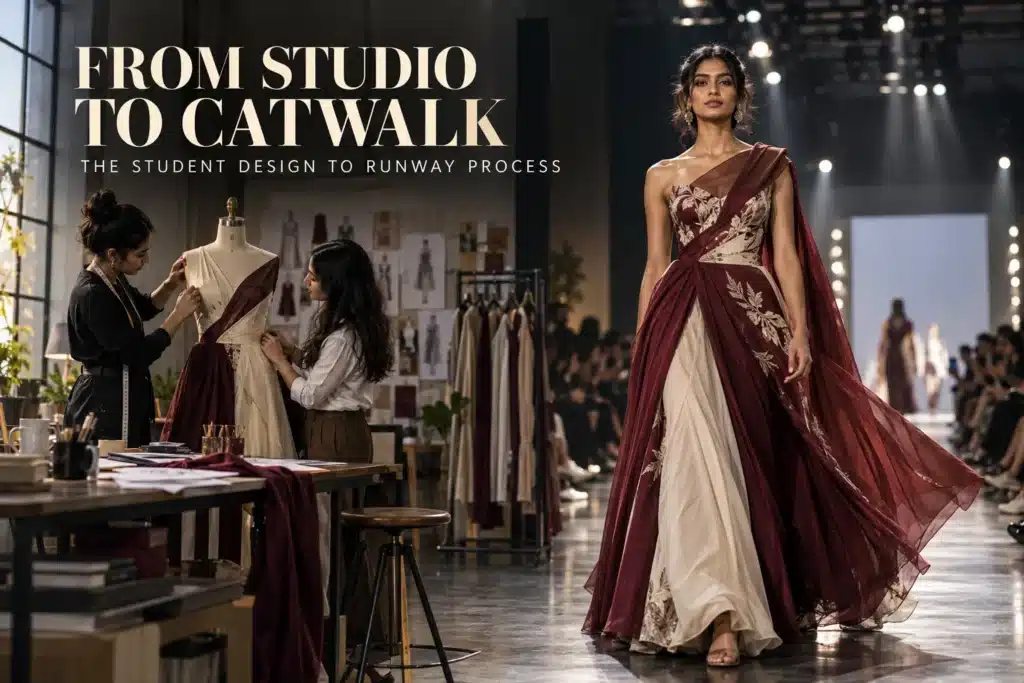
Table Of Content
