

A garment may look complete on a dress form, but the real test begins when a model wears it. Trial fitting for runway garments helps designers see how an outfit fits, moves and holds its shape before it reaches the catwalk. A hem that looks level on a dress form may sit unevenly on the model. A sleeve may restrict arm movement, or a neckline may shift with each step.
For fashion students, the fitting room connects pattern making, draping, garment construction and styling. It shows how a small change, such as moving a shoulder seam, can affect the way the whole outfit hangs.
What Is a Trial Fitting for Runway Garments?
A trial fitting is a session in which the selected model wears a garment so the designer can check its fit, balance, comfort and movement. Depending on the stage of development, the model may wear a toile, a partially constructed garment or the finished outfit with shoes and accessories.
Start with accurate measurements for the silhouette. Along with the bust or chest, waist and hips, a fitted jacket may require shoulder, back and arm measurements. A floor-length gown needs a waist-to-floor measurement taken with the planned footwear. Two models with similar measurements can have different proportions, so the garment still needs to be fitted on the person who will wear it.
What to Check During a Model Fitting
Have the garment, fitting tools, footwear and styling references ready. Ask the model to wear the planned base garments, then assess the outfit from the front, side and back while they stand naturally. Check whether the shoulder seams, waistline and hem sit as intended. Look for side seams that swing forward or back, drag lines that suggest strain, or heavy embellishments that pull the garment out of position.
Next, ask the model to walk at runway pace, stop, pose and turn. A full stride can reveal a skirt that twists or a train that catches underfoot. Raising the arms can show whether a sleeve or armhole pulls the bodice upwards. Sitting or bending can reveal strain around the waist, hips or closures.
Explain before touching, pinning or adjusting the garment. Describe what the garment needs, such as extra room at the armhole, and encourage the model to say if anything pinches, scratches, slips or restricts movement.
How Fabric and Styling Affect the Fit
The final fabric may behave differently from the toile. Chiffon can become more transparent under strong lighting, heavy embellishments can pull on seams, and stretch fabrics may loosen as the model moves. Check how the fabric drapes, how layers interact and whether the garment needs support from a lining, interfacing or an internal fastening.
Include the planned shoes, undergarments and accessories in the fitting. Heel height changes posture, stride and hem clearance. A belt can alter the drape of a dress, and a headpiece can interfere with a collar or limit the model’s vision.
Take front, side and back photographs, and record a short video of the model walking and turning. Photographs help you review proportions, while video shows how details such as trains, slits and loose layers behave in motion. Watch the trial-fitting video.
Planning Runway Garment Alterations
Record each correction during the fitting. Prioritise problems that affect safety, movement and garment balance, then secure closures and refine the hem and finishing. Make structural changes before finishing nearby areas. Moving a shoulder seam, for example, can change the neckline, armhole and sleeve. Keep enough seam allowance for adjustments and check the garment again after major changes.
For shows with several looks, record the look number, model, garment pieces, footwear, accessories and who is responsible for each alteration. Store matching pieces together. If an outfit requires assistance or a specific dressing order, give the backstage team brief instructions and a photograph of the finished look.
Practical Runway Fitting Checklist
- Fit and balance — Check seam placement, waistline, hem and silhouette from all angles.
- Movement and safety — Test the full stride, turn and pose. Check for catching trains, sharp trim, loose accessories and restricted vision.
- Construction — Check fastenings, lining and embellishments. Replace temporary pins with secure alterations.
- Styling — Test the complete look with runway shoes, base garments and accessories.
- Backstage — Label each look, keep its pieces together and practise any quick changes.
- Final check — Refit the altered garment and test it in motion before the show.
What Fashion Students Learn from Trial Fittings
Fittings teach students to connect what they see on the model to decisions made in the pattern, fabric and construction. They also build practical skills in measuring, documenting alterations and working with models. ISFT’s one-year Diploma in Fashion Design & Technology covers garment construction, draping, textile science, sewing, fashion illustration, CAD and portfolio development.
Conclusion
Trial fittings give designers time to correct problems while preserving the original idea. The final test is whether the garment holds its intended shape and lets the model walk, turn and pose confidently.
FAQs
1. Why is trial fitting for runway garments important?
It reveals issues such as uneven hems, shifting necklines and restricted movement before the show.
2. How many fittings does a runway garment need?
A simple look may need one fitting and a final check. Structured or heavily embellished pieces may need several.
3. What should a model bring to a fitting?ow should students prepare for a fashion design jury?
Bring the requested undergarments and runway shoes, along with any accessories the design team specifies.
4. When should runway garment alterations be completed?
Finish major alterations early enough for a second fitting. Leave small finishing tasks for the final check.
5. Can a garment fit well while standing and still cause problems on the runway?
Yes. Walking and turning can reveal restricted movement, shifting layers or a train that catches underfoot.
6. Why should the model wear runway shoes during the fitting?
The shoes affect posture, stride and the distance between the hem and the floor.
7. What tools are useful during a fitting?
Bring pins, clips, tailor’s chalk, measuring tape, a needle and thread, a fitting record and a phone or camera.
8. What is the difference between a fitting and a dress rehearsal?
A fitting identifies what the garment needs adjusted. A dress rehearsal tests the finished look under show conditions, including lighting, runway timing and outfit changes.
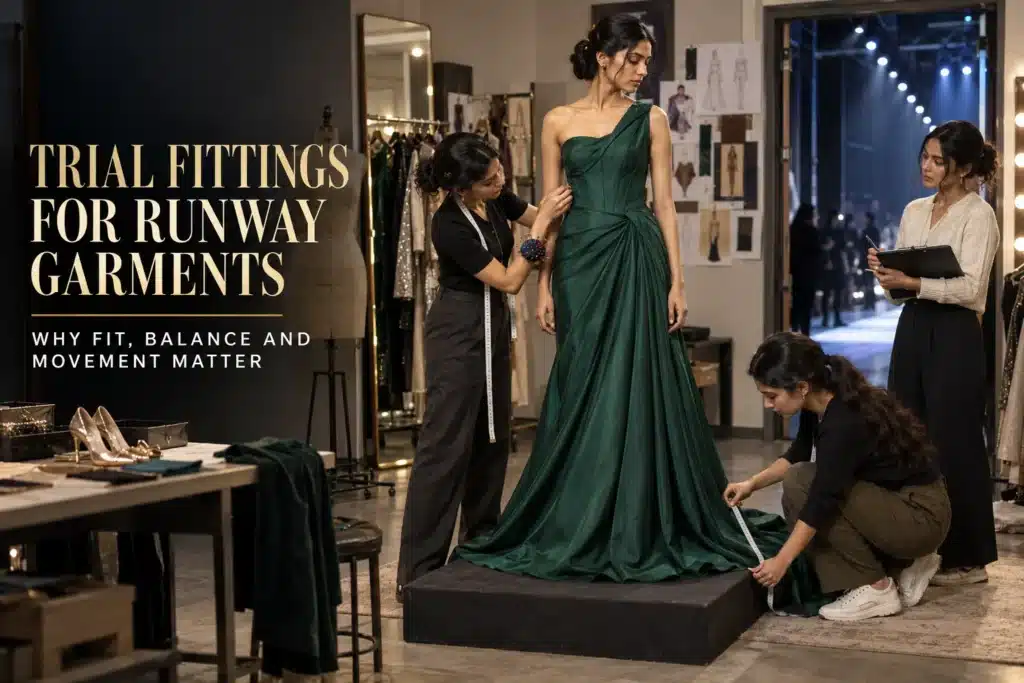
Table Of Content
