

Designing a garment is only one part of fashion education. Students also need to understand how it fits, moves and communicates an idea to an audience. A student fashion show brings these responsibilities together.
From fittings and styling to rehearsals and backstage changes, students make choices that affect the entire presentation. They learn to explain their work, coordinate with others and respond when plans change. These experiences help turn classroom knowledge into practical judgement.
What Is Student Fashion Show Learning?
Student fashion show learning covers the skills developed while preparing and presenting a collection. Students may work as designers, stylists, dressers, model coordinators or backstage assistants.
Each role reveals how individual decisions affect other people. An unclear instruction can delay an entrance, while a missing accessory can change a complete look.
Understanding student fashion event production helps learners see how garments, styling, model coordination and photography connect during a presentation.
Seeing Garments Beyond the Classroom
A garment can look convincing on a dress form but behave differently on a moving body. Fabric may gather unexpectedly, a hem may restrict walking, or an embroidered detail may disappear under stage lighting.
Fittings and rehearsals encourage students to examine their work from the audience’s viewpoint. They begin asking:
- Can the model move comfortably?
- Are important details visible?
- Does the silhouette remain clear while walking?
- Do the shoes support the outfit’s proportions?
These questions encourage decisions based on observation. Students learn when to adjust a design, even if they feel attached to the original version.
Learning to Present a Collection Clearly
A fashion presentation needs a connection between its individual looks. Garment order, colour, styling and movement all influence how the audience understands the collection.
Students must decide which outfit introduces the concept, how the sequence develops and which look provides a suitable ending. Presenting similar silhouettes together might feel repetitive, while an abrupt colour change could interrupt the collection’s flow.
They also practise explaining their research, fabric choices and intended wearer. Describing these decisions clearly prepares students for portfolio discussions, assessments and future client conversations.
Understanding the Role of Styling
Accessories, footwear, hair and makeup should support the garment’s central idea. Too many competing details can make an outfit difficult to understand.
During preparation, students compare styling options and decide what deserves attention. A simple hairstyle may reveal an interesting neckline, while different footwear may change how a model carries a garment.
Students interested in this part of presentation can explore ISFT’s Diploma in Fashion Styling & Makeup, which includes show styling and fashion photography in its published curriculum. ISFT
Making Decisions Under Time Pressure
Runway decision making becomes especially important when something unexpected happens. A fastening may break, a model may arrive late, or a quick change may take longer than planned.
Students need to identify the problem, assess its effect and choose a workable response. For example:
- Move a look later to allow more changing time.
- Remove an accessory that keeps catching on fabric.
- Repair a fastening before approving the garment.
- Replace unstable shoes with a suitable pair.
Safety and comfort should guide these choices. Students gradually learn which problems need immediate attention and which minor preferences can wait.
Building Teamwork Through Clear Communication
A student collection reaches the runway through shared effort. Designers depend on models, dressers, coordinators, makeup artists and technical teams.
Clear instructions reduce confusion. Each person should know their responsibilities, reporting time and whom to approach when a problem appears. Changes to the running order must reach everyone involved.
Model briefings also matter. Students should explain walking restrictions, garment handling and any special pauses without criticising the model’s body. Listening to concerns about fit or discomfort helps the team make better decisions.
This develops respectful communication and accountability.
Using Rehearsals to Improve Judgement
Rehearsals test whether a plan works in practice. A sequence that looks sensible on paper may leave too little time for changing or create crowding backstage.
Students can observe garment movement, entrance cues, walking pace and model spacing. They should record problems and agree on changes before the final event.
For example, if an outfit requires several complicated fastenings, the team may assign another dresser or reconsider the model allocation.
Rehearsals teach students to test assumptions and understand how one adjustment affects the wider presentation.
A Practical Preparation Checklist
Before the show, confirm that garments are finished, pressed and labelled. Keep shoes and accessories together, photograph each complete look and share the final running order.
Prepare a repair kit and assign dressing responsibilities. After the event, check garments for damage, collect documentation and review what caused delays. These small habits make preparation easier and help students take responsibility for their work.
Connecting Fashion Subjects Through Practical Work
Fashion shows bring several classroom subjects into one project. Textile knowledge helps students understand fabric movement. Pattern making and garment construction support fitting corrections, while quality checks reveal weak seams or insecure closures.
Collection development connects individual outfits, and portfolio preparation helps students document the finished work.
ISFT’s B.Sc. in Fashion Design & Technology provides a three-year programme covering creative and technical study. Students can review the fashion designing syllabus to understand how subjects such as textiles, construction, draping and portfolio development relate to this process. ISFT
Building Confidence and Learning from Feedback
Public presentation can feel stressful, especially when students have invested weeks in their garments. Preparation makes the task more manageable.
Completing fittings, briefing models and solving problems gives students evidence of their abilities. Confidence develops through these actions, including work completed backstage.
After the show, feedback should focus on specific decisions. Which garments moved well? Was the sequence clear? Did styling support the concept?
Students can compare repeated observations, identify useful changes and record what they would approach differently next time.
Documenting the Experience
Photographs, videos and development notes help students evaluate their progress. A useful portfolio can include concept boards, sketches, fitting images, final looks and a short explanation of the student’s responsibilities.
The fashion presentation video included with this article can sit alongside these records as a viewing reference.
Students should explain the decisions behind their work, including changes made during preparation. This gives context to finished photographs and shows how an idea developed through practical decisions.
Conclusion
Student fashion show learning connects creativity with responsibility. Students learn to present collections, work with others and make practical choices under pressure.
These lessons continue beyond the runway, supporting interviews, internships and future projects. Prospective students can review ISFT’s admission process to understand the steps involved in applying for a design programme.
FAQs
Can shy students benefit from fashion shows?
Yes. Backstage roles offer opportunities to practise communication, organisation and responsibility without appearing on the runway. Confidence can grow through completing assigned tasks.
What should students do when something goes wrong?
Check whether the problem affects safety, fit or timing. Inform the coordinator, choose a reliable solution and communicate any changes to the people involved.
How does fashion show participation support a portfolio?
It provides material showing research, garment development, presentation and teamwork. Students should describe their contribution clearly and include evidence of the decisions they made.
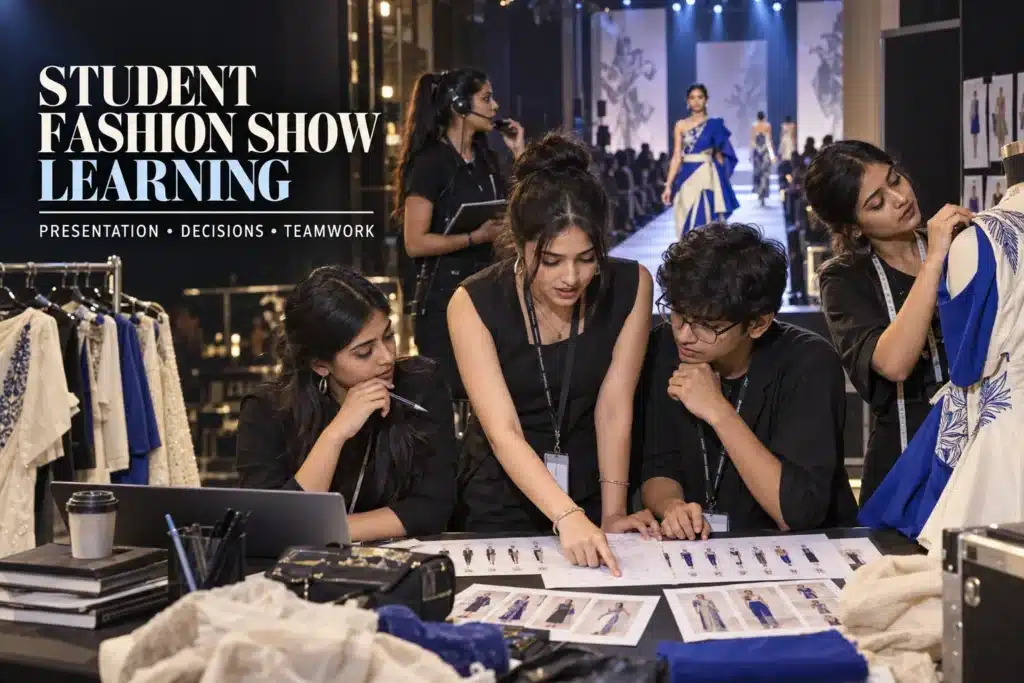
Table Of Content
- What Is Student Fashion Show Learning?
- Seeing Garments Beyond the Classroom
- Learning to Present a Collection Clearly
- Understanding the Role of Styling
- Making Decisions Under Time Pressure
- Building Teamwork Through Clear Communication
- Using Rehearsals to Improve Judgement
- A Practical Preparation Checklist
- Connecting Fashion Subjects Through Practical Work
- Building Confidence and Learning from Feedback
- Documenting the Experience
