

A textile carries more than colour and pattern. Its fibres, motifs and making techniques can reveal connections with a place, community and way of life. Presenting it thoughtfully helps an audience understand these relationships.
Using traditional textiles in visual display gives fashion students an opportunity to connect research with design. They learn to choose backgrounds, arrange fabric, write labels and guide attention without losing the textile’s identity. The aim is to make the material understandable while respecting the people and skills behind it.
What Are Traditional Textiles?
Traditional textiles are fabrics associated with established regional or community practices. They may be woven, dyed, printed, painted or embroidered.
Their identity comes from a combination of materials, techniques, makers and uses. A fabric does not become traditional simply because it appears old or handmade.
Students should understand these connections before displaying the material. Accurate information gives meaning to the arrangement and prevents a specific textile tradition from becoming a general decorative theme.
Begin with Research
Research should guide the display from the beginning. Before choosing props or arranging fabric, students need to establish what they are presenting.
Useful questions include:
- What is the textile’s correct name?
- Which region or community is associated with it?
- What fibres and techniques are used?
- How was it traditionally worn or used?
- Is information about the maker available?
- Are motif meanings supported by reliable references?
Study the border, repeat pattern, surface and reverse. Avoid guessing when information is uncertain. Recording sources also makes it easier to check labels later.
Choose One Clear Display Concept
A focused concept helps students decide what belongs in the display. It might explore a making process, a motif, a regional tradition or the use of heritage fabric in contemporary clothing.
Trying to explain everything at once often produces a crowded arrangement. Instead, write one sentence describing what viewers should understand.
For example, a process-based display could move from yarn and tools to fabric samples and a completed garment. Every supporting element should contribute to that sequence.
Planning an Indian Textile Display
Choose one region, technique or shared question before selecting fabrics. If a map is included, pair it with information about makers and processes.
Where traditions cross regional boundaries, explain those connections rather than forcing each fabric into a single place. Specific names and careful comparisons help viewers recognise differences within the wider presentation and understand why each textile belongs.
Create a Visual Hierarchy
Visual hierarchy determines what people notice first and where their attention moves next. The textile should remain the main focus.
A simple arrangement might place the main fabric at eye level, with smaller samples and photographs nearby. Labels can provide details after the viewer has noticed the material.
Stand back and assess the display from its expected viewing distance. If a large prop attracts more attention than the fabric, reconsider its size or position.
Empty space helps separate information and gives detailed textiles room to be seen clearly.
Use Colour and Props with Purpose
The background affects how a textile’s colours appear. A busy setting can compete with complex patterns, while a quieter surface may make them easier to examine.
Choose a background that supports the concept rather than repeating every colour in the fabric.
Props should provide information. Relevant tools, yarn, process photographs or maps can explain how and where the textile was made. Unrelated objects chosen only because they look traditional can confuse the story.
Ask what each object helps the audience understand. Remove anything without a clear purpose.
Drape Fabric Without Hiding Its Character
Draping reveals weight, softness, transparency and movement. Flat arrangements show complete motifs, while controlled folds can demonstrate how a textile behaves when worn.
Students exploring fashion draping on a dress form can consider how fabric behaviour influences shape and balance.
For display, keep the important border or surface detail visible. A complicated arrangement may look attractive but conceal the feature being explained.
Check the front, side and back, and avoid pulling the material into shapes that place unnecessary strain on it.
Plan Lighting and Labels Together
Lighting should help viewers see colour, texture and detail. Test for glare, heavy shadows and heat near the material.
Labels need equal attention. Small writing or poor contrast can make useful information difficult to read.
A short textile label may include:
- Textile name
- Region or community
- Fibre and technique
- Maker, where known
- Traditional use
- Date or period, where documented
Keep uncertain details clearly identified. Avoid assigning symbolic meanings to motifs without evidence. A short, accurate explanation is more useful than an elaborate description built on assumptions.
Connect Heritage with Contemporary Design
Traditional textiles can be displayed beside modern garments, accessories or design sketches. This allows students to explore how established techniques inform present-day fashion.
The relationship should be explained through specific choices, such as silhouette, motif placement or fabric use.
Students interested in developing their styling approach can explore ISFT’s Diploma in Fashion Styling & Makeup.
Contemporary presentation should still acknowledge the textile’s source and makers. Use suitable samples or reproductions for experiments instead of cutting a valuable textile simply to create a new appearance.
Protect the Textile During Display
Careful handling is part of responsible presentation. Begin with clean hands and a clean working surface. Keep food, drinks and damp materials away.
Avoid direct sunlight, strong adhesives and sharp supports that could damage the fabric. Heavy textiles need suitable support so their weight does not pull from one narrow point.
Fragile materials may be better displayed flat. Seek appropriate guidance before handling valuable or historic pieces.
After the exhibition, check each textile and return it to suitable storage.
Connect the Project with Fashion Education
Textile displays bring together research, colour planning, draping, styling and written communication. Students learn to make visual decisions based on material knowledge.
ISFT’s B.Sc. in Fashion Design & Technology includes textile science, fabric studies, costume studies, draping and visual merchandising.
Reviewing the BSc fashion designing syllabus helps students understand how these subjects connect with garment development and presentation.
Document research, layout sketches, experiments and final photographs. Together, these records can become a portfolio case study showing the reasons behind the finished display.
Conclusion
Traditional textiles in visual display connect material knowledge with thoughtful communication. Research helps establish the story, while arrangement, lighting and labels make it accessible.
For students, the project develops practical judgement and respect for craftsmanship. Those considering formal study can review ISFT’s admission process to understand how to apply for a design programme.
FAQs
What makes a textile display effective?
A clear concept, accurate research and a readable arrangement help viewers understand the fabric. Draping, lighting, props and labels should support the textile’s main features.
Can different traditional textiles appear together?
Yes, when their relationship is explained. Students might compare a technique, material or use. Grouping unrelated fabrics only because they are colourful can weaken the display.
How can students review their work?
View the arrangement from different angles, photograph it and ask someone unfamiliar with the textile to explain what they understood. Their response can reveal missing context or distracting elements.
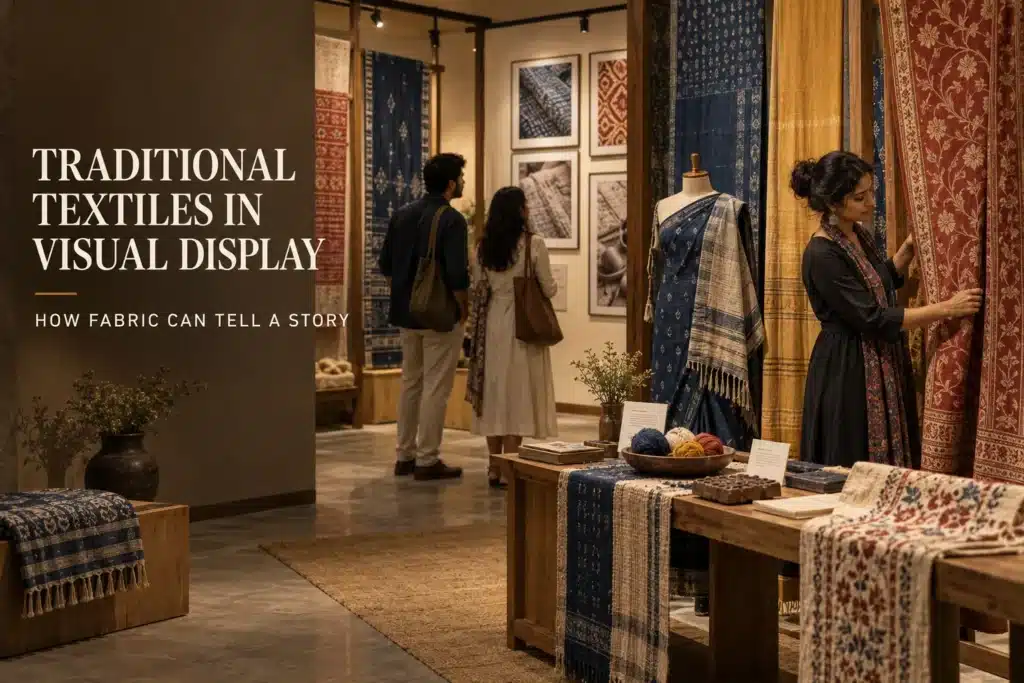
Table Of Content
- What Are Traditional Textiles?
- Begin with Research
- Choose One Clear Display Concept
- Planning an Indian Textile Display
- Create a Visual Hierarchy
- Use Colour and Props with Purpose
- Drape Fabric Without Hiding Its Character
- Plan Lighting and Labels Together
- Connect Heritage with Contemporary Design
- Protect the Textile During Display
- Connect the Project with Fashion Education
