

Mood based fashion styling begins with a feeling. Before choosing clothes, a stylist decides what the look should express: confidence, calm, nostalgia, joy or something more complex.
That emotion guides the colour, silhouette, fabric and finishing details. Hair, makeup, posture and surroundings also influence how the outfit is understood.
Think of a black dress worn with delicate heels, then imagine it with heavy boots. The garment stays the same, but its character changes. Understanding those relationships helps stylists create outfits where every choice has a purpose.
Start with One Clear Emotion
Choose one dominant feeling before looking for garments. A brief containing romance, rebellion, mystery and playfulness can quickly become difficult to follow.
You can introduce a secondary feeling, such as calm confidence, once the main direction is clear.
Write a short fashion mood concept in plain language. For example: “Composed, comfortable and quietly assured, with clean shapes and little decoration.”
Use this description when assessing each item. A beautiful piece may still feel out of place if it introduces a different message.
Build a Mood Board Beyond Clothing
Gather references that help you describe the atmosphere. Include photographs, paintings, interiors, landscapes, textures and lighting alongside fashion images.
For nostalgia, you might select faded family photographs, worn leather, warm interiors and muted floral patterns. These references suggest colours and surfaces without prescribing an exact outfit.
Add notes explaining what interests you. Is it the softened colour, the curved shape or the sense of movement?
Keep the board focused. Several images that express the same idea clearly are more useful than a crowded collection of unrelated favourites.
Use reference images to study relationships between colour, shape and atmosphere. Build your own combination instead of reproducing every detail from one photograph.
Choose Colour in Context
Colour contributes to expressive outfit creation, but it does not have one fixed emotional meaning.
Muted blues and greys might support a calm concept. Bright contrasting shades could suggest energy. Yet the same pink can feel gentle, bold or futuristic depending on its surroundings.
Consider how the colours work together and how much contrast the look needs. A restrained palette can allow texture or shape to receive more attention.
Test your choices beside the actual garments. Lighting and neighbouring colours can change the overall impression.
Use Silhouette to Shape the Message
Silhouette is the overall outline created by clothing. Sharp shoulders, flowing hems, fitted shapes and oversized layers each give you different possibilities.
A tailored jacket might support a composed look, while wide trousers and a loose shirt could introduce ease and movement.
These associations are starting points, not rules. Structured clothing can appear gentle when combined with soft fabric and relaxed styling.
Check the person’s comfort and preferences too. The shape should support the intended mood while allowing them to move naturally.
Let Fabric Add Feeling
Texture can change the character of an outfit even when the colour stays constant.
Black velvet may suggest a different atmosphere from black nylon. Crisp cotton can emphasise a clean shape, while a softly draped fabric can bring movement.
Handle samples where possible. Notice whether the material falls, holds its shape, reflects light or creates volume.
You can mix textures to introduce contrast. Before adding another fabric, check whether it strengthens the concept or simply makes the outfit busier.
Make Accessories and Footwear Count
Shoes, jewellery, bags and eyewear should contribute to the same idea as the clothes.
Heavy boots might introduce toughness to a delicate dress. A small textured bag and understated jewellery could support a nostalgic direction.
Contrast can work well when it has a clear purpose. Soft clothing with angular accessories may create a tension that suits the brief.
Try the outfit with different footwear before deciding. Check proportions, movement and practicality, and remove accessories that compete unnecessarily for attention.
Connect Hair, Makeup and Body Language
Emotion-led styling extends beyond garments. Discuss the mood with the hairstylist, makeup artist and person wearing the look.
Loose hair and softer makeup might suit a gentle concept, while controlled hair shapes and graphic details could support a sharper direction.
Pose also changes the image. The same suit can appear assured, reflective or tense depending on posture, expression and movement.
Offer clear references while allowing the person to feel comfortable. Forced expressions can distract from the clothing and make the intended feeling less convincing.
Consider Lighting and Location
A look photographed in soft daylight may feel different under strong studio lighting. Background colours and surfaces also affect how clothing appears.
Discuss the setting with the photographer before finalising garments. Check whether reflective fabrics, delicate details or dark layers will remain visible.
The location should support the fashion mood concept. An unexpected setting can introduce contrast, but the connection should still be understandable.
Build Two Different Looks from Emotion
Quiet confidence: Start with navy, cream or another palette that suits the wearer. Combine a tailored jacket with fluid trousers and a simple inner layer. Add restrained jewellery, suitable structured footwear and neatly arranged hair. Relaxed posture can keep the result from feeling overly formal.
Soft nostalgia: Explore muted colours, a gently shaped dress and tactile materials. Consider a small bag, subtle jewellery and soft hair. Warm daylight or a familiar interior may support the atmosphere.
These are possible interpretations. Different people, cultures and settings may lead you towards different choices.
Practise Without Turning the Mood into a Costume
Avoid assuming that rebellion always requires leather or romance always requires lace. Ask what the emotion means within this particular brief.
Try a simple exercise:
- Choose one emotion and describe it in a sentence.
- Select a palette, silhouette and fabric direction.
- Add footwear, accessories, hair and makeup ideas.
- Photograph the complete look and review the result.
- Remove anything that distracts from the main feeling.
Repeat the exercise with a contrasting emotion using some of the same clothes. This encourages interpretation rather than dependence on obvious symbols.
The same thinking can support personal styling. A client may want to appear approachable, creative or confident while remaining comfortable in familiar clothing.
Those interested in developing these skills further can explore the Certified Image and Style Consultant Program.
Watch: Understanding Image, Styling and Visual Expression
Conclusion
Mood based fashion styling gives clothing a clear direction. Start with a feeling, explore how different elements express it and test the complete look. The strongest decisions connect the concept with the person wearing the clothes.
FAQs
What is mood based fashion styling?
It is the process of creating a look around an emotional idea. Clothing, colour, texture, accessories and presentation work together to express that feeling.
Can one outfit communicate two emotions?
Yes. Choose a dominant feeling and use another to add depth. Calm confidence or gentle nostalgia can provide clearer direction than several competing ideas.
Do colours have fixed emotional meanings?
No. Colour associations depend on context, culture, personal experience and the surrounding styling. Consider the complete combination rather than assigning one meaning to a shade.
Is this approach only useful for photoshoots?
No. It can also guide occasion dressing, wardrobe planning and image consulting. Adapt the concept to the person’s everyday needs, preferences and comfort.
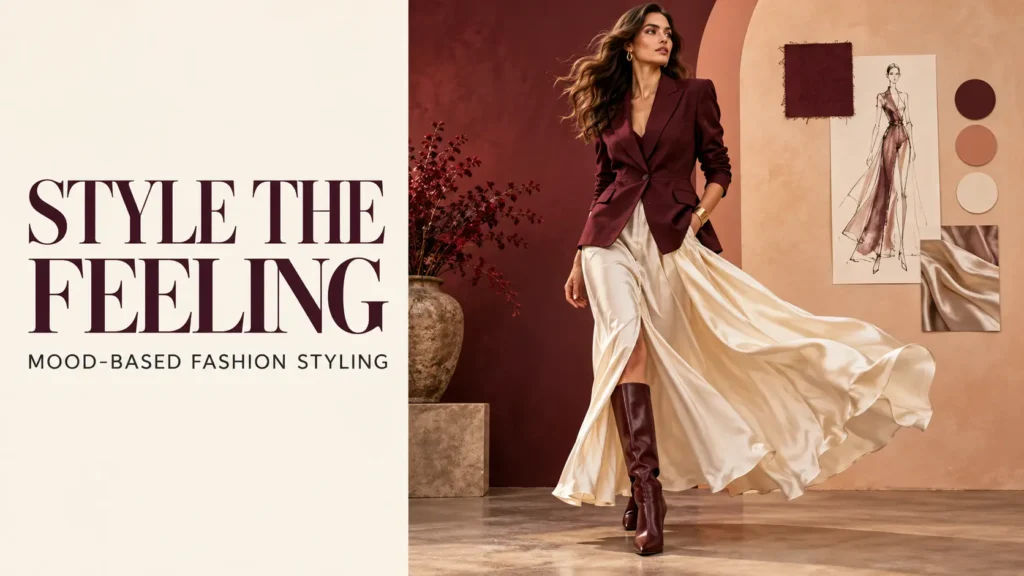
Table Of Content
- Start with One Clear Emotion
- Build a Mood Board Beyond Clothing
- Choose Colour in Context
- Use Silhouette to Shape the Message
- Let Fabric Add Feeling
- Make Accessories and Footwear Count
- Connect Hair, Makeup and Body Language
- Consider Lighting and Location
- Build Two Different Looks from Emotion
- Practise Without Turning the Mood into a Costume
