

Fashion design jury evaluation is an important part of a fashion student’s learning journey. It allows students to present their creativity, technical skills and design development to teachers, mentors and industry professionals.
But a jury is not just about showcasing beautiful garments. Evaluators want to understand the thinking, research and effort behind every design.
From concept development to garment construction and final presentation, each stage matters.
Let’s understand what a fashion design jury involves and how students can prepare for it.
What Is a Fashion Design Jury?
A fashion design jury is an assessment where students present their design projects or fashion collections to a panel of evaluators.
The presentation may include:
- Concept and inspiration boards
- Mood boards and colour palettes
- Fashion illustrations and sketches
- Fabric and material samples
- Design development work
- Garment construction details
- Completed garments
- Portfolio and styling photographs
Students are also expected to explain their creative decisions and answer questions about their work.
The goal is to evaluate both design creativity and practical understanding.
Why Is Fashion Design Jury Evaluation Important?
A jury helps students understand their strengths and identify areas where they can improve.
It also prepares them for professional situations where designers must explain their ideas to clients, teams or employers.
Some important benefits include:
- Creative development: Encourages students to explore and improve design ideas.
- Technical assessment: Evaluates garment construction, fit and finishing.
- Communication skills: Builds confidence in explaining creative decisions.
- Problem-solving: Helps students understand mistakes and possible improvements.
- Professional preparation: Introduces students to structured design presentations.
A jury gives students an opportunity to demonstrate what they have learned throughout their project.
1. Concept Clarity and Research
One of the first things evaluators examine is the student’s design concept.
A strong concept should have a clear source of inspiration and a visible connection with the final collection.
For example, if a student creates a collection inspired by nature, the designs might incorporate organic shapes, natural colours or textures.
Research should support these decisions through relevant references, observations and experiments.
Students should be prepared to explain why they selected their inspiration and how it influenced the garments.
2. Design Development and Creativity
Design development shows how an initial idea becomes a finished garment.
During fashion design jury evaluation, students may be asked to present:
- Initial sketches
- Silhouette explorations
- Colour combinations
- Fabric experiments
- Surface ornamentation samples
- Pattern or draping trials
- Final illustrations
Evaluators want to see how students explored different possibilities before selecting their final designs.
Including important corrections and improvements can also demonstrate learning and problem-solving.
3. Fashion Collection Jury Assessment
A fashion collection jury examines how individual garments work together as a complete collection.
Evaluators consider whether the designs follow a consistent theme while offering enough variation.
Important areas include:
- Collection concept
- Colour coordination
- Fabric selection
- Silhouette development
- Design consistency
- Garment finishing
- Styling and presentation
Each outfit should contribute to the overall collection.
Students should also identify the garment that best represents their concept and explain why it stands out.
4. Garment Construction and Technical Skills
Creativity is important, but technical execution is equally essential.
A well-designed garment should demonstrate an understanding of construction techniques and fabric behaviour.
Evaluators may check:
- Stitching quality
- Seam finishing
- Pattern accuracy
- Neckline and armhole construction
- Hem finishing
- Fastenings and closures
- Garment balance
- Overall fit
Students should inspect both the inside and outside of each garment before the assessment.
Even small finishing mistakes can affect the final presentation.
5. Fabric Selection and Colour Understanding
The choice of fabric influences how a garment looks, fits and moves.
Students should understand why a particular material suits their design.
For example, lightweight fabrics may create flowing silhouettes, while structured materials can help maintain defined shapes.
Evaluators may also examine how colours relate to the collection’s theme.
Students should be ready to explain their fabric choices, colour palette and material experiments.
6. Design Presentation Assessment
A design presentation assessment evaluates how effectively students communicate their work.
Even a strong collection can become difficult to understand when the presentation is unorganised.
A clear presentation should follow this sequence:
- Introduce the project and concept.
- Explain the inspiration and research.
- Present the mood board and colour palette.
- Show design sketches and development.
- Explain fabric and technical decisions.
- Present the completed collection.
- Discuss challenges and improvements.
Students should practise explaining their work naturally instead of reading directly from their presentation boards.
7. Student Jury Preparation Checklist
Good student jury preparation begins before the assessment day.
Students should review their institution’s requirements and organise all necessary materials.
Before the jury, check that:
- Garments are completed, clean and pressed.
- Inspiration boards and sketches are organised.
- Fabric samples are labelled.
- Portfolio pages follow the correct order.
- Technical details are clearly documented.
- Styling complements the garments.
- Presentation files are ready.
- The verbal explanation has been rehearsed.
Preparing early allows time to correct mistakes and avoid unnecessary last-minute confusion.
8. Common Questions Asked During a Fashion Design Jury
Students should be prepared for questions such as:
- What inspired your collection?
- Why did you choose this particular concept?
- How did your research influence the designs?
- Why did you select these fabrics?
- What challenges did you face during garment construction?
- How are the garments connected?
- Which design best represents your concept?
- What would you improve in your collection?
The best answers come from understanding the actual design process rather than memorising prepared responses.
9. Common Mistakes Students Should Avoid
Some common mistakes during jury presentations include:
- Presenting an unclear concept
- Showing only finished garments without development work
- Using unorganised or overcrowded presentation boards
- Ignoring garment finishing
- Reading the entire presentation
- Giving vague answers
- Becoming defensive when receiving feedback
Students should listen carefully, explain their decisions respectfully and remain open to suggestions.
Watch a Student Fashion Design Jury Presentation
Watch this student jury presentation video to understand how design projects are presented and discussed during an assessment.
Observe how students organise their work, explain their concepts and communicate their design decisions.
Developing Design Presentation Skills at ISFT
At ISFT, students explore creative and technical design skills through subjects and practical project work.
The institute’s Post Graduate Diploma in Interior Design includes design fundamentals, sketching, construction materials, design history, residential design and CAD.
Project-based learning, creative presentations and portfolio development help students practise communicating their ideas.
Students interested in developing these skills can explore the Post Graduate Diploma in Interior Design for curriculum and course information.
Conclusion
Fashion design jury evaluation helps students demonstrate both creativity and technical understanding.
A successful presentation depends on clear research, thoughtful design development, proper garment construction and confident communication.
By preparing their work carefully and understanding their design decisions, students can approach jury assessments with greater confidence and use the feedback to improve their future projects.
FAQs
1. What is fashion design jury evaluation?
Fashion design jury evaluation is an assessment where students present their concepts, research, design development, garments and technical skills to a panel of evaluators.
2. What does a fashion collection jury evaluate?
A fashion collection jury generally evaluates concept clarity, design consistency, creativity, fabric selection, garment construction, fit and final presentation.
3. How should students prepare for a fashion design jury?
Students should organise their portfolios, inspect garments, prepare research materials, practise their presentations and review possible questions.
4. What happens if a student cannot answer a jury question?
Students should respond honestly, explain what they understand and ask for clarification when necessary rather than guessing.
5. Why is a design portfolio important during jury evaluation?
A portfolio shows the complete design journey, including research, sketches, experiments, technical development and final outcomes.
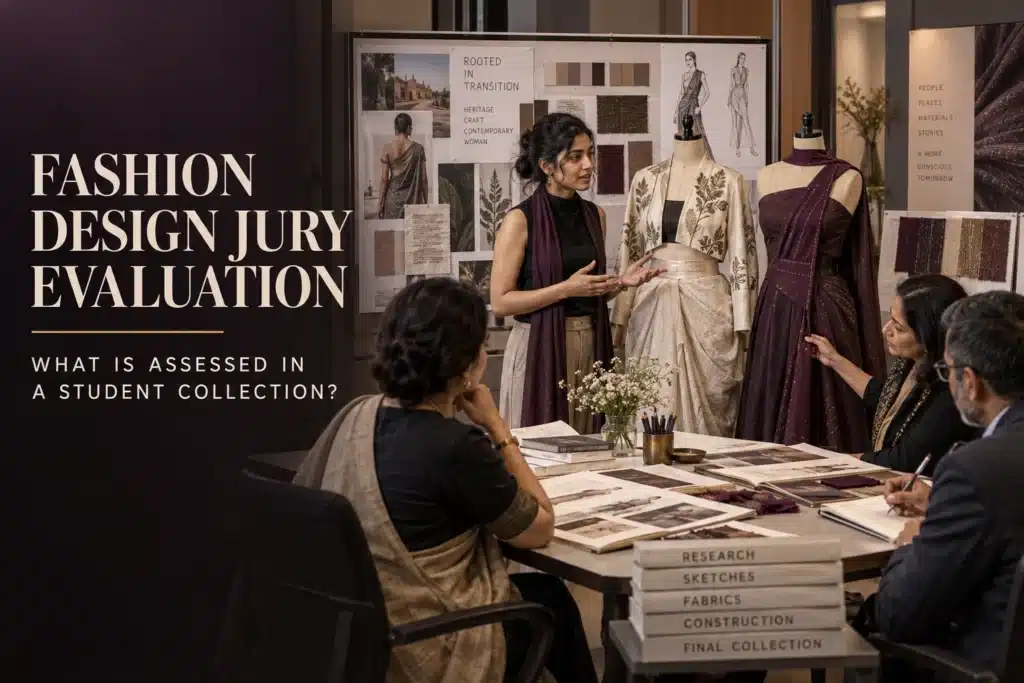
Table Of Content
