

Fashion styling for digital influencers goes beyond choosing fashionable clothes. An outfit must look appealing on camera, reflect the creator’s personality and complement the purpose of the content.
An outfit that looks impressive in front of a mirror may appear completely different under studio lighting. Certain colours may lose their intensity, oversized clothing may dominate the frame, and delicate accessories may become almost invisible.
Whether an influencer creates Instagram Reels, YouTube videos, lifestyle photographs or sponsored content, their appearance contributes to their visual identity.
Understanding how clothing, lighting, backgrounds and camera angles work together helps stylists create outfits that feel natural, attractive and consistent across digital platforms.
What Is Fashion Styling for Digital Influencers?
Fashion styling for digital influencers involves selecting and coordinating clothing, accessories, colours, silhouettes and beauty elements specifically for digital content.
Unlike everyday fashion styling, it considers how an outfit appears through a camera lens.
Professional digital styling focuses on:
- Personal style and influencer identity
- Camera framing and angles
- Lighting and background colours
- Clothing proportions and movement
- Brand collaboration requirements
- Audience preferences
- Content format and purpose
The objective is to create an appearance that supports the influencer’s personality without distracting viewers from the content.
Why Camera Styling Is Different From Everyday Styling
Cameras can change how clothing colours, textures and proportions appear. An outfit that feels perfectly balanced in person may look visually crowded on a screen.
For example, a heavily printed shirt combined with statement jewellery and a colourful background may distract viewers during an educational video.
Replacing it with a solid-coloured shirt can create a cleaner frame while maintaining a fashionable appearance.
Camera-ready outfits require stylists to consider the complete composition rather than focusing exclusively on clothing.
How to Create Camera-Ready Outfits for Digital Influencers
1. Understand the Content Format
Different content formats require different styling approaches. Before selecting an outfit, understand where and how the content will appear.
Content Format | Recommended Styling Approach |
Instagram Reels | Comfortable outfits with clear silhouettes and natural movement |
Fashion photography | Detailed styling with coordinated accessories |
YouTube videos | Comfortable clothing with attractive upper-body details |
Brand campaigns | Outfits that complement the featured product |
Live sessions | Practical clothing with minimal distractions |
Professional videos | Clean tailoring and polished accessories |
Understanding the format helps stylists make practical wardrobe decisions.
2. Develop a Recognisable Visual Identity
Successful influencer wardrobe planning begins with understanding the creator’s personality and existing content style.
A lifestyle influencer may prefer relaxed silhouettes and neutral colours, while a fashion influencer may experiment with bold accessories and contemporary clothing.
Identify recurring visual elements such as preferred colours, signature accessories, footwear, hairstyles and makeup choices.
Maintaining certain styling patterns helps audiences recognise the creator even when individual outfits change.
3. Choose Colours That Work Well on Camera
Colour selection plays an important role in social media fashion styling.
Consider the influencer’s skin tone, background, lighting conditions and overall content theme before choosing clothing.
For example, wearing beige against a beige background may cause the influencer to blend into the surroundings. Introducing a darker jacket or contrasting accessory can improve visual separation.
Solid colours often work well for educational videos, while carefully selected prints and brighter shades may complement fashion and lifestyle content.
Always test colours under the actual shooting conditions.
4. Match Clothing With the Background
The shooting environment directly influences how an outfit appears.
A floral dress, colourful accessories and patterned wallpaper may compete for attention within the same frame.
A simpler outfit generally works better against a detailed background. Conversely, a clean background provides more freedom to experiment with prints, bold colours and statement pieces.
Good fashion styling considers everything visible in the final frame.
5. Select Silhouettes According to Camera Framing
Different camera angles highlight different aspects of an outfit.
Camera Framing | Styling Focus |
Close-up | Necklines, earrings, makeup and hairstyles |
Waist-up | Tops, jackets, collars and necklaces |
Full-body | Clothing proportions, footwear and accessories |
Seated videos | Comfortable fabrics, garment fit and layering |
Movement-based videos | Flexible clothing and secure accessories |
For instance, an oversized blazer can be balanced with a fitted inner layer to prevent the upper body from looking visually heavy.
Understanding camera framing makes clothing combinations more effective.
6. Be Careful With Small Prints and Patterns
Very narrow stripes, small checks and dense patterns can sometimes create distracting visual effects on camera.
This does not mean influencers should completely avoid printed clothing. Larger patterns and carefully selected designs can add personality to an outfit.
The appearance of prints depends on camera quality, recording distance, lighting and background.
Recording a short test video before filming can help identify potential problems.
7. Choose Clothing That Supports Movement
Digital influencers frequently walk, turn, demonstrate products, dance or change positions while recording.
Their clothing should allow natural movement without requiring constant adjustments.
Check whether the garment remains comfortable while sitting, whether straps stay in position and whether jewellery becomes distracting during movement.
Comfortable clothing allows creators to focus on their performance rather than repeatedly adjusting their outfits.
How Accessories Improve Social Media Fashion Styling
Accessories help communicate personality and establish a recognisable visual identity.
Gold hoops, structured handbags, statement glasses, watches, scarves and layered necklaces can become signature elements within an influencer’s wardrobe.
However, accessory size should match the camera framing. Delicate earrings may work well in close-up videos but disappear in full-body photographs.
Similarly, oversized jewellery may dominate a talking-head video.
Choose accessories that complement the outfit and remain visible without distracting from the creator or featured product.
Fashion Styling for Influencer Brand Collaborations
Sponsored content requires thoughtful styling because the featured product should remain the primary focus.
Brand Collaboration | Styling Recommendation |
Jewellery | Choose necklines that keep jewellery visible |
Skincare | Use simple clothing and controlled accessories |
Handbags | Avoid competing prints around the product |
Footwear | Select trousers or skirts that reveal the shoes |
Beauty products | Maintain a clean upper-body appearance |
Fashion brands | Coordinate clothing with campaign requirements |
Effective fashion styling supports product presentation while maintaining the influencer’s authentic identity.
Build an Influencer Capsule Wardrobe
A capsule wardrobe helps influencers create multiple outfits using a limited collection of versatile clothing.
A practical content-focused wardrobe could include:
- White shirts and neutral fitted tops
- Structured blazers and denim jackets
- Straight-leg jeans and tailored trousers
- Wide-leg trousers and comfortable knitwear
- Neutral handbags and statement accessories
- Sneakers, loafers and simple heels
Layering these pieces differently can produce several camera-ready outfits during a single content shoot.
This approach reduces wardrobe expenses, saves preparation time and maintains visual consistency.
Consider Text Placement and Graphic Overlays
Social media videos frequently include subtitles, headings, product information and graphic elements.
Heavily patterned clothing may make text difficult to read when overlays appear across the upper body.
Choosing simpler clothing can improve readability and make the final content feel more organised.
Stylists should consider how the edited video will appear, not just the original footage.
Common Mistakes in Fashion Styling for Digital Influencers
Some common styling mistakes include:
- Choosing outfits without testing them on camera.
- Ignoring lighting and background colours.
- Wearing too many statement accessories.
- Selecting uncomfortable clothing for movement-based videos.
- Copying other influencers instead of developing an individual style.
- Constantly changing the creator’s visual identity.
- Allowing clothing to distract from sponsored products.
Avoiding these mistakes helps create balanced, professional-looking digital content.
How Fashion Consultants Can Support Digital Creators
Fashion consultants can help digital influencers develop consistent wardrobes that reflect their personality, content requirements and professional image.
They can assist with colour selection, signature silhouettes, wardrobe coordination, accessory planning and content-specific outfit development.
For aspiring professionals interested in developing these skills, the Certified Fashion Consultant Program provides a structured approach to learning fashion consulting, wardrobe planning and styling principles.
These skills are particularly useful for working with digital creators, personal brands and fashion-focused businesses.
Watch: Fashion Styling and Wardrobe Planning for Digital Content
Explore how fashion styling, wardrobe coordination and thoughtful outfit selection contribute to creating visually appealing digital content.
Conclusion
Fashion styling for digital influencers requires an understanding of clothing, personal identity, camera framing and digital content requirements.
By selecting appropriate colours, silhouettes, accessories and comfortable garments, influencers can develop a recognisable visual identity without repeating the same outfits.
For individuals interested in pursuing fashion consulting professionally, the Certified Fashion Consultant Program offers a structured opportunity to understand wardrobe development, personal styling and visual presentation.
An outfit may look beautiful in the wardrobe, but for a digital influencer, it must also work beautifully on the screen.
FAQs
1. What is fashion styling for digital influencers?
It involves selecting clothing, colours, accessories and silhouettes that complement an influencer’s personality while appearing balanced and attractive in digital content.
2. What are camera-ready outfits?
Camera-ready outfits are clothing combinations selected according to lighting, camera framing, movement, background and content requirements.
3. Why is influencer wardrobe planning important?
Wardrobe planning helps creators maintain visual consistency, reduce preparation time and develop multiple outfits for photographs, videos and brand collaborations.
4. What colours work well for influencer videos?
Solid colours, neutral shades and contrasting colour combinations can work well depending on the background, lighting and influencer’s personal style.
5. Should influencers avoid printed clothing?
No. Printed clothing can look attractive on camera, but very small or dense patterns should be tested before filming to avoid distracting visual effects.
6. How can influencers maintain a consistent fashion identity?
Influencers can maintain consistency through recurring colour palettes, signature accessories, preferred silhouettes and reliable outfit combinations.
7. Can fashion styling improve brand collaboration content?
Yes. Thoughtful fashion styling helps highlight featured products, maintain visual clarity and create a professional appearance that complements campaign requirements.
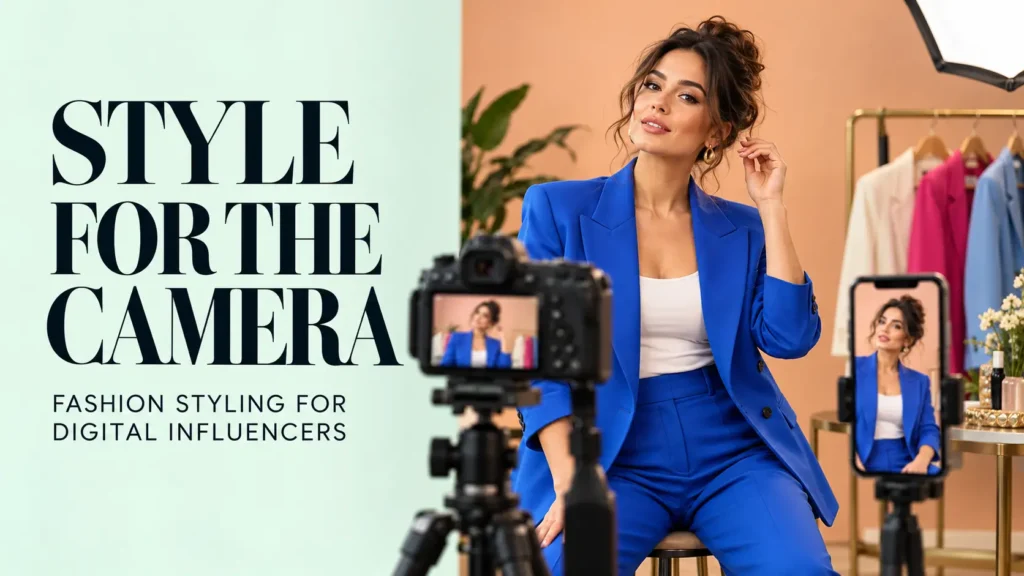
Table Of Content
- 1. What is fashion styling for digital influencers?
- 2. What are camera-ready outfits?
- 3. Why is influencer wardrobe planning important?
- 4. What colours work well for influencer videos?
- 5. Should influencers avoid printed clothing?
- 6. How can influencers maintain a consistent fashion identity?
- 7. Can fashion styling improve brand collaboration content?
