

Fashion trend research for stylists helps turn fashion references into ideas that suit real people. A saved outfit can be useful, but the important work begins when you ask why it works and how its elements could be used differently.
Consider an oversized blazer styled with cycling shorts and loafers. The useful idea might be relaxed tailoring, contrasting proportions or mixing formal and casual pieces.
Another client might wear that idea through a linen suit or a loose jacket over a dress. Research provides the starting point; your decisions shape the result.
What Does Fashion Trend Research Involve?
Trend research means studying changes in silhouettes, colours, fabrics, accessories and dressing habits. It helps you understand which ideas are appearing repeatedly and where they might be relevant.
A broader trend may appear across collections, shops and everyday dressing. A microtrend can gain attention quickly within a smaller audience. Personal style describes the preferences that make someone’s wardrobe feel like their own.
Recognising these differences helps you decide how much attention each observation deserves.
Study Several Types of Fashion References
Different references reveal different things:
- Runway collections: Study silhouette, scale, colour and unexpected combinations. A dramatic look may contain one practical layering idea.
- Street style: Observe how people adapt clothing to everyday movement, weather and personal taste.
- Fashion editorials: Look at the story behind the clothes, including texture, accessories and proportions.
- Retail stores: Check which ideas are reaching shoppers and how they appear across different price ranges.
- Social platforms: Use them to notice conversations and emerging looks, then compare those observations elsewhere.
Avoid relying entirely on one familiar feed. Include styles outside your usual preferences so your research stays varied.
Look for Patterns Through Current Trend Analysis
Current trend analysis begins when you compare references instead of judging each outfit separately.
Suppose several images show longer jackets, softer shoulders and wider trousers. Together, those details suggest a direction worth investigating. One unusual outfit offers less evidence.
Record where you noticed each detail and when. Check whether it also appears in shops, editorials or street photographs.
Repeated appearances can strengthen an observation, but they do not guarantee widespread popularity. A look may matter within one community or market while remaining uncommon elsewhere.
Break Complete Outfits into Useful Elements
When saving a reference, identify the parts that interest you:
- Silhouette: Is the overall shape fitted, loose, structured or flowing?
- Colour: Are the shades closely related, contrasting or mostly neutral?
- Texture: How do smooth, rough, sheer or knitted surfaces interact?
- Proportion: How do garment lengths and widths work together?
- Layering: What sits over or underneath another piece?
- Accessories: Which item draws attention, and why?
Add a short note explaining the relationship. “A cropped jacket balances wide trousers” gives you something to explore. “Nice outfit” gives you very little direction later.
Understand Why the Styling Works
Original styling research becomes more useful when you examine the reasoning behind a look.
Imagine a reference featuring a burgundy leather jacket, cream trousers and brown boots. Perhaps you like the warm colour relationships more than the individual garments.
You could explore that relationship through rust knitwear, beige trousers and tan shoes. The combinations share an idea while producing different results.
Try changing the colour, garment type, silhouette or accessories during practice. Changing several elements encourages interpretation, although no fixed number automatically makes a look original.
Practise Fashion Forecast Interpretation
Fashion forecast interpretation involves understanding the broader direction behind suggested colours, fabrics or silhouettes.
A forecast featuring natural textures, muted greens and relaxed shapes might suggest an interest in easy, tactile dressing. That direction could become an olive linen shirt, a textured jacket or a woven bag.
Treat forecasts as possibilities to assess. Consider whether the idea suits your client, available clothing and styling brief.
You do not need to include every predicted detail. A small reference can communicate the mood without taking over the outfit.
Organise Your Research Around Ideas
Build separate boards for colour, proportion, layering, texture and accessories. This makes it easier to combine observations from several references.
Keep a simple observation sheet with the element, source, date, frequency and possible uses. A notebook or spreadsheet is enough. The value comes from recording your reasoning, so you can return to an idea and understand why you saved it.
Save brief notes alongside images. For example, explain how a belt changes a loose silhouette or how a shoe shape affects the proportions.
Review your collection regularly and remove repeated references that no longer add anything useful.
Put the Client Before the Trend
Before trying an idea, consider the client’s lifestyle, profession, climate, occasion, comfort, preferences, existing wardrobe and budget.
If sheer layering interests them, it might work as a sleeve detail or an overshirt with an opaque base. Another client may prefer to skip it entirely.
Ask whether the trend solves a practical styling problem. Does it help create the silhouette they want? Can they move comfortably? Will it work with clothes they already own?
For someone who prefers familiar clothing, one updated accessory may be enough. The person wearing the outfit should remain comfortable with the final choices.
Find References Beyond Current Fashion
Architecture, interiors, painting, films and nature can provide ideas for shapes, textures and colour combinations.
Historical clothing also gives context. Studying earlier tailoring, silhouettes and accessories can help you recognise how familiar ideas are being reinterpreted.
Use these references thoughtfully and record what caught your attention. Combining observations from different areas gives you more material to work with than repeatedly studying one person’s outfits.
Turn Research into Regular Practice
Choose a short styling brief and develop two different looks from the same research direction. Explain how each meets the person’s needs.
Photograph the results, compare them with your references and note what changed. This helps you evaluate your decisions.
Also note what did not work. A strong photograph may hide uncomfortable footwear, impractical layering or proportions that feel different in person. Testing reveals whether an appealing idea is useful for clients beyond the reference image.
Structured learning can support this process. The Certified Fashion Consultant Program offers aspiring stylists a route to explore fashion consulting and styling more systematically.
Watch: Fashion Styling & Trend Research in Practice
Conclusion
Fashion trend research for stylists works best when observation leads to thoughtful decisions. Study recurring details, understand their effect and test different interpretations. Keep the client’s needs central, and let your research support choices you can explain.
FAQs
How can stylists follow trends without copying?
Identify the principle behind a reference, such as colour harmony or contrasting proportions. Apply it using different garments and choices suited to the client.
What makes current trend analysis useful?
Comparing observations across several sources helps you recognise repeated ideas and question whether a single popular image represents a wider direction.
How often should stylists research trends?
Make research an ongoing habit. Regular observation and dated notes make it easier to notice changes than occasional browsing before a project.
Should every client wear current trends?
No. Consider personal taste, comfort, lifestyle and the occasion. A client may enjoy one element of a trend or choose to leave it out.
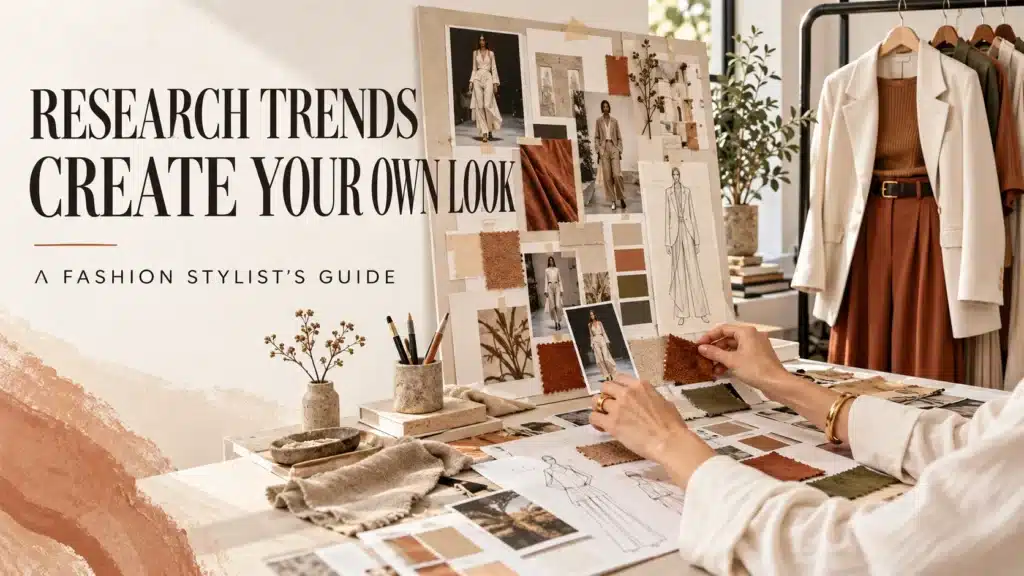
Table Of Content
- What Does Fashion Trend Research Involve?
- Study Several Types of Fashion References
- Look for Patterns Through Current Trend Analysis
- Break Complete Outfits into Useful Elements
- Understand Why the Styling Works
- Organise Your Research Around Ideas
- Put the Client Before the Trend
- Find References Beyond Current Fashion
- Turn Research into Regular Practice
