

A fashion show may last only a few minutes, but much of what makes it run smoothly happens backstage. While one model walks, another may be changing shoes and the coordinator may be calling the next entrance. The fashion show rehearsal process gives the team a chance to practise those steps together and see where the plan needs adjusting.
For fashion students, a rehearsal is also a chance to see a collection in show order. It’s part of student fashion event production. Designers can judge how each garment moves, whether the styling works under stage lights and how much time the audience has to see important details.
What Happens During a Fashion Show Rehearsal?
An early walk-through helps models learn where to enter, pause, turn and exit. A garment rehearsal adds outfits, footwear and accessories so the team can check movement and practise changes. The final dress rehearsal brings these elements together with music, lighting and the full running order. In an uninterrupted run, the team can see how a late entrance or slow change affects the looks that follow.
Planning the Runway Order
Start with an inventory. Number each look and record the model, garment pieces, shoes, accessories and any special dressing instructions. Then arrange the collection in an order that makes sense visually and gives models enough time to change.
Check the gap between appearances by the same model. If a model wears a layered outfit for Look 3 and needs to return in a lace-up garment for Look 5, time the change before confirming the order. Moving the second look later or assigning it to another model can give the dressers enough time. Allow for the walk back from the runway and any hair or makeup touch-ups.
Preparing Garments and Coordinating Models
Check fit, footwear and ease of movement when assigning looks. Each model should know which outfits they are wearing, when they appear and who will help them change. Before rehearsal, inspect hems, zips, hooks, straps and embellishments. Arrange garments on racks in show order and keep each outfit’s shoes and accessories together.
Attach a look card to the rack or place it near the changing area. Include the look number, model’s name, a photograph or sketch and any dressing instructions. For teams handling fashion styling and makeup, the card can also show the intended hair and makeup. A reference image is especially useful when a belt, draped panel or detachable piece has to sit in a particular position.
Checking Garments in Motion
Watch the model in the planned shoes at the pace they will use on show day. Look for hems that catch, straps that slip, necklines that shift and skirts that shorten the model’s stride. Ask the model to pause and turn so you can see whether a train clears their feet or a draped section falls back into place. Record any corrections and test the garment again after an alteration. If a draped panel keeps shifting, revisit how it was shaped during draping on the dress form.
Use the venue runway when possible. Steps, narrow turns and changes in floor level can affect how a model handles a long gown or cape. Mark the entrance, photo point and exit, then let models practise until they can follow the route while looking ahead.
Managing Quick Changes Backstage
Measure each change from the moment the model exits until they are ready at the next entrance. Have the next outfit out of its cover, with fastenings open and pieces arranged in dressing order. Keep shoes and jewellery within reach. Time the change more than once to see whether the team can complete it consistently.
Give each person a clear job. The show coordinator calls the sequence, the model coordinator checks who is ready, and assigned dressers help with changes. At a student show, one person may cover several duties. Agree in advance who will report a delay and who can adjust the next cue. Keep changing areas and the route to the runway clear of spare racks and garment bags.
Testing Music, Lighting and Photography
Rehearse with the show soundtrack so models can learn their entry cues and practise the spacing between walks. Check that the music leaves enough time for each pose and for the finale. Under stage lighting, look at how fabric colours, reflective trim and sheer layers appear. Agree on a photo point where the garment is well lit and photographers have a clear view. The same lighting and framing checks are useful when planning a fashion photoshoot. Watch the fashion show video.
Final Dress Rehearsal Checklist
- Before the run, confirm the order, model assignments and cues. Check look cards, lay out accessories and keep a repair kit nearby with matching thread, spare fastenings and fashion tape.
- During the run, time entrances and changes. Watch model spacing, garment movement and backstage traffic. Record missed cues or safety concerns as they occur.
- After the run, review delays, complete necessary alterations and retest affected looks. Update the running order and look cards, then share the changes with the full team.
Agree on what happens if a fastening breaks or a model is still changing at their cue. The coordinator can hold an entrance, move another look forward or omit the affected outfit if needed.
What Fashion Students Learn from Rehearsals
A rehearsal shows students how decisions made in the studio affect the runway. Fabric choice changes how a garment moves, construction affects how quickly a model can get dressed, and styling influences what the audience sees. Students can explore these subjects through ISFT’s three-year B.Sc. in Fashion Design & Technology, which includes textiles, pattern making, garment construction, draping, collection development and portfolio work. Read about AVASSA, ISFT’s runway showcase, or see how to apply to ISFT.
Conclusion
A timed rehearsal lets the team see how the collection, model movements and backstage changes work together. When corrections are tested and cues are clear, models can focus on presenting the garments.
FAQs
1. How many rehearsals does a fashion show need?
A small show may use a walk-through, a garment rehearsal and a final dress rehearsal. Larger shows may need separate technical sessions.
2. Why is runway rehearsal planning important?
It gives the team time to resolve tight changes, unclear cues and garment problems before show day.
3. How are quick changes managed backstage?
Dressers prepare the next outfit in dressing order and practise the full change within the time available.
4. What does model garment coordination include?
It covers fit, footwear, accessories, model assignments, appearance order and help with changes.
5. Why test garments on the actual runway?
The floor, lighting and space available for turns can affect how the garment looks and moves.
6. Who manages backstage timing for fashion shows?
The show coordinator manages the sequence, with updates from the model coordinator and dressers.
7. What should the team review after the final rehearsal?
Check the show duration, delayed entrances, quick changes, garment movement and safety concerns before confirming the final order.
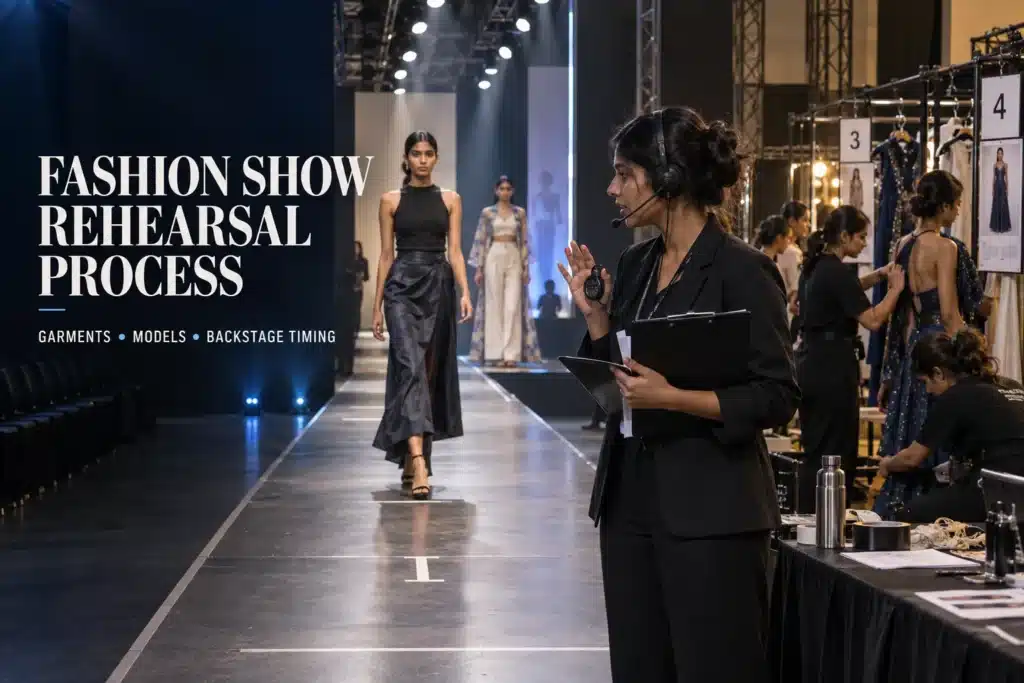
Table Of Content
